First-party data works best when people understand why you are asking for information and what they get in return. A customer may not want another pop-up, another long form, or another generic email signup. But they may be willing to share an email address, preference, purchase goal, or service need when the value is clear.
That value exchange is the difference between helpful data collection and intrusive marketing.
For small and mid-sized businesses, first-party data has become one of the most reliable ways to build stronger customer relationships, improve targeting, and reduce wasted ad spend. Google is no longer following its original plan to fully phase out third-party cookies in Chrome, but that does not mean businesses can keep relying on rented data and platform signals the same way they used to. Google announced in 2025 that Chrome would maintain its current third-party cookie choice approach, and later said it would retire several Privacy Sandbox technologies because of low adoption. [¹][²]
The bigger shift is still happening. Privacy laws are expanding, customers expect more control, browsers are adding more tracking protections, and ad platforms are giving businesses less complete data than they once did. First-party data gives you a more durable path forward because it comes directly from your own audience with permission.
This guide explains how to collect first-party data in a way that feels useful, transparent, and trust-building instead of annoying.
Key Takeaways
- First-party data is collected directly from your own customers, leads, and website visitors.
- The strongest data strategies are built around consent, transparency, and a clear value exchange.
- First-party data can include website behavior, form submissions, CRM data, email engagement, purchase history, quote requests, survey answers, and customer service interactions.
- Zero-party data is information a customer intentionally gives you, such as preferences, goals, interests, or purchase intent.
- Progressive profiling helps you collect useful information over time instead of overwhelming people with long forms.
- A first-party data audit can help you find what you already have, what you are missing, and what you should stop collecting.
- The real value comes from turning data into better segmentation, personalization, lead nurturing, and measurable marketing results.
What Is First-Party Data?
First-party data is information your business collects directly from people who interact with your owned channels. That can include your website, CRM, email platform, ecommerce store, mobile app, phone calls, landing pages, lead forms, surveys, loyalty program, or customer service process.
Common examples of first-party data include:
- Email signups
- Contact form submissions
- Quote requests
- Purchase history
- Website pages viewed
- Appointment requests
- Chat conversations
- CRM notes
- Email clicks
- Loyalty program activity
- On-site search terms
- Product interests
- Downloaded resources
- Customer service questions
- Post-purchase feedback
- Preference-center selections
The value of first-party data is that it comes from your direct relationship with your audience. You are not renting a broad audience from a third-party provider. You are learning from the people who already visit your site, contact your business, buy your products, request your services, or engage with your brand.
Boston Consulting Group notes that first-party data is valuable because it is proprietary, directly relevant to the company and its customers, and higher quality because it comes from the source. BCG also found that companies linking their first-party data sources can generate stronger revenue and cost-efficiency improvements than companies with limited data integration. [³]
Why First-Party Data Matters Now
The old digital marketing playbook relied heavily on third-party cookies, broad audience targeting, and data rented from platforms. That approach is becoming less dependable.
Chrome still gives users third-party cookie choices, but the advertising ecosystem has already changed. Businesses now face privacy rules, consent requirements, ad-blocking, fragmented customer journeys, less transparent platform reporting, and customers who expect more control over how their information is used.
That makes first-party data more important for SMBs that want more stable, measurable marketing.
With a privacy-first first-party data strategy, your business can:
- Build stronger owned customer relationships
- Improve lead quality
- Personalize emails, landing pages, and offers
- Segment audiences by intent or behavior
- Reduce wasted ad spend
- Improve retargeting performance
- Strengthen conversion rate optimization
- Measure campaign performance more clearly
- Create a better customer experience
First-party data is not just a replacement for cookies. It is a foundation for better marketing decisions.
First-Party vs. Zero-Party vs. Second-Party vs. Third-Party Data
Knowing how each data type works can help you build a smarter customer data strategy.
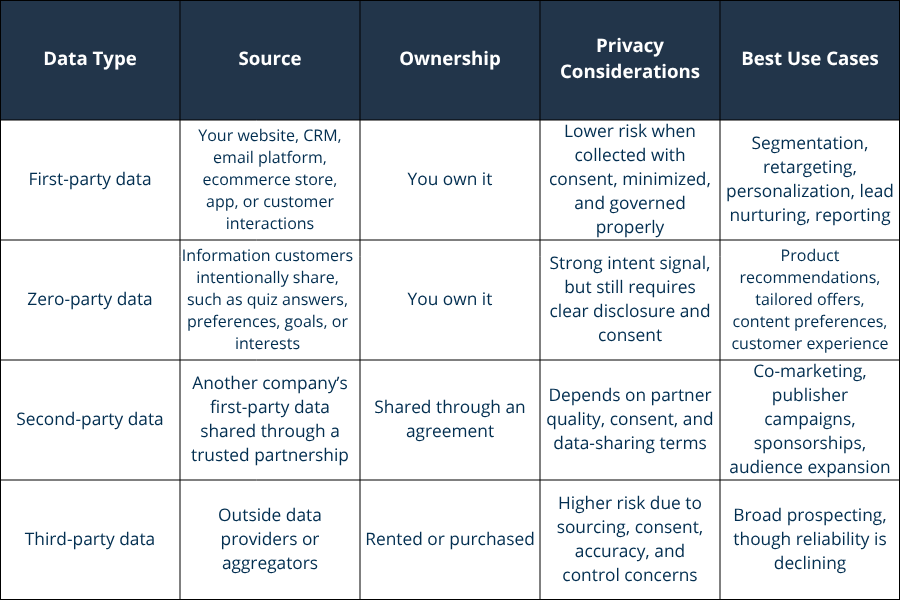
Zero-party data is especially useful because the customer gives it intentionally. For example, a skincare customer may answer a quiz about skin type, a B2B lead may share company size, or a homeowner may select the service they need from a form. That information tells you what the person actually wants, which makes your follow-up more relevant.
The Golden Rule: Trade Value for Data
People share information when there is a clear reason to do it.
That is the anti-annoyance principle behind ethical data collection. Before asking for any information, ask this question:
What does the customer get in return?
The answer could be:
- A discount code
- A helpful checklist
- A personalized recommendation
- Faster checkout
- Appointment reminders
- Better service matching
- Early access to a launch
- A free consultation
- A useful guide
- More relevant emails
- Saved preferences
- Easier reordering
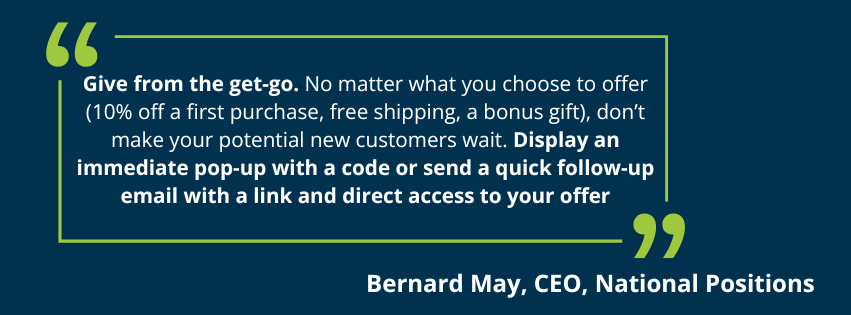
The value exchange should feel immediate and worthwhile. Discounts, free shipping, bonus gifts, helpful resources, easier checkout, and more relevant recommendations can all work, but the key is making the payoff clear before someone shares their information.
Start With a First-Party Data Audit
Before you add another pop-up, quiz, or lead form, look at the data you already collect.
Many businesses are sitting on useful first-party data but are not organizing it, connecting it, or using it effectively. The issue is not always a lack of data. It is often a lack of structure.
A first-party data audit should answer these questions:
- What data are we already collecting?
- Where is that data stored?
- Do we have clear consent?
- Is the data accurate?
- Which data points help sales or marketing take action?
- What data are we collecting but not using?
- Which forms are asking for too much too soon?
- Are website events, calls, forms, and purchases tracked correctly?
- Is our CRM connected to our email, analytics, and advertising platforms?
- What data would help us improve lead quality or customer experience?
This step can reveal quick wins. You may find that form submissions are not passing into your CRM correctly, call tracking is not connected to campaigns, ecommerce events are incomplete, or email engagement data is not being used for segmentation.
For many SMBs, the challenge is not deciding that first-party data matters. It is knowing which data points are worth collecting, how to connect them across platforms, and how to use them to improve marketing performance. That is where a structured strategy can turn scattered customer information into a clearer path for growth.
9 Ways to Collect First-Party Data Customers Actually Want to Share
The best collection methods feel natural because they fit the customer journey. Here are nine practical options for SMBs.
1. Email Opt-Ins With a Clear Incentive
An email signup should give people a reason to subscribe. Offer a discount, checklist, free shipping code, early access, guide, or helpful tips related to their needs.
Good email list-building strategies do not rely on generic “join our newsletter” language. They explain the benefit clearly.
2. Loyalty Programs
Loyalty programs give customers a reason to identify themselves, return to your business, and share useful behavior data over time.
For ecommerce brands, this may include purchase frequency, favorite products, average order value, and reward activity. For service businesses, it may include repeat appointments, maintenance reminders, or membership perks.
3. Preference Centers
A preference center lets subscribers choose what they want to hear about and how often they want to hear from you.
This can include product categories, service interests, email frequency, location, content topics, or communication channels. Preference centers help reduce unsubscribes because customers can adjust their experience instead of leaving your list completely.
4. Gated Content
Gated content works when the resource is valuable enough to justify the form. Strong examples include templates, calculators, buying guides, webinars, industry reports, comparison guides, or checklists.
Keep the form short. If someone is downloading a beginner-level guide, an email address may be enough. If someone is requesting a consultation, it may be appropriate to ask for more details.
5. Surveys and Quizzes
Surveys and quizzes are effective because they collect zero-party data while helping the customer get a useful answer.
A quiz can recommend a product, service, treatment path, software package, or content category. A short survey can reveal customer goals, pain points, timing, budget range, or satisfaction level.
6. Account Creation
Account creation can be annoying when it is forced too early. It becomes useful when customers receive something meaningful in return.
Offer benefits such as saved carts, faster checkout, order tracking, easy reordering, saved preferences, exclusive offers, or appointment history.
7. Post-Purchase Feedback
A post-purchase survey does not need to be long. One or two well-timed questions can reveal what influenced the purchase, what almost stopped the customer, or what they may need next.
For example:
- What made you choose us?
- What problem were you trying to solve?
- How likely are you to buy again?
- What could have made the experience better?
- Which product or service are you interested in next?
8. Customer Onboarding
Customer onboarding is one of the best times to collect useful first-party data because the relationship has already started.
For B2B companies, onboarding can capture goals, decision-makers, timelines, reporting preferences, communication preferences, and service priorities. For local service businesses, it can capture property details, service history, appointment preferences, or recurring needs.
9. Live Chat and Customer Service Conversations
Live chat, phone calls, emails, and customer service tickets can reveal high-intent questions and common objections.
These interactions can help you understand:
- What customers ask before buying
- Which services create the most confusion
- What objections slow down conversions
- Which products need better descriptions
- Which follow-up messages would be most helpful
- What content your website should answer more clearly
This data is already being shared with your team. The opportunity is to organize it and turn it into better marketing.
Fix Your Tracking Before Adding More Forms
Many businesses try to collect more data when they should first fix the data they are already missing.
Before asking customers for more information, review your tracking setup. Make sure your business can accurately capture important actions across your website, CRM, analytics, and advertising platforms.
Review:
- Form submission tracking
- Phone call tracking
- Appointment request tracking
- Ecommerce events
- Lead source attribution
- Email signup events
- Chat interactions
- CRM lifecycle stages
- Paid ad conversion tracking
- Consent banner behavior
- Analytics events
- Landing page performance
- Offline conversion imports
This is where first-party data becomes more than a marketing buzzword. If your forms, calls, purchases, and CRM stages are not tracked correctly, your campaigns may optimize toward incomplete or misleading signals.
A tracking audit can help you collect cleaner data without adding friction for customers. It can also help your marketing team make better budget decisions because campaign performance is tied to actions that matter, not just surface-level clicks or visits.
Use Progressive Profiling to Ask Less and Learn More
Progressive profiling means collecting information in small steps over time instead of asking for everything at once.
The first form may only ask for an email address. The next interaction may ask for a name. Later, you may ask about interests, timeline, budget, company size, or service needs.
This approach works because it respects the customer’s attention. Shorter forms usually feel easier to complete, especially at the top of the funnel. As trust grows, you can ask for more specific details that improve personalization and sales follow-up.
Progressive profiling is especially helpful for:
- B2B lead generation
- Ecommerce personalization
- Healthcare-adjacent marketing
- Professional services
- Subscription businesses
- Local service companies
- Education and training programs
- High-consideration purchases
The goal is not to collect everything. The goal is to collect the next most useful piece of information at the right time.
Build a Preference Center for Transparency
A preference center gives customers more control over their relationship with your brand.
Instead of forcing people into one generic email list, let them tell you what they want. They may want monthly updates instead of weekly emails. They may only care about one product category. They may prefer educational content over promotional offers.
A strong preference center can include:
- Email frequency
- Product or service interests
- Location
- Content topics
- Communication channels
- SMS consent
- Promotional preferences
- Event or webinar interests
- Consent updates
This helps your business collect better zero-party data while reducing list fatigue. It also shows customers that you respect their time.
Best Practices for Collecting Data Without Annoying Customers
Customer data collection should feel intentional, not aggressive. Use these best practices to keep the experience helpful.
Ask Only for What You Need
Every field should have a clear purpose. If you do not need a phone number at the first step, do not ask for it. If a budget range is only useful for sales-qualified leads, save it for a later form.
Explain the Benefit
Tell people why you are asking. “Choose your interests so we can send more relevant tips” feels better than a vague signup form with no context.
Be Transparent About Data Use
Explain how you will use the information. Customers should know if they are signing up for email updates, requesting a consultation, downloading a guide, or creating an account.
Make Opting Out Easy
Customers should be able to unsubscribe, update preferences, or withdraw consent without a frustrating process. The California Consumer Privacy Act gives California residents rights that include knowing what personal information businesses collect, requesting deletion, opting out of sale or sharing, correcting inaccurate information, and limiting the use of sensitive personal information. [⁴]
Avoid Interruptive Pop-Ups
A pop-up that appears before someone reads a single word can feel intrusive. Consider timing pop-ups based on scroll depth, exit intent, repeat visits, or specific page behavior.
Deliver on the Promise
If you offer a guide, send the guide. If you promise personalized recommendations, make them useful. If someone chooses monthly emails, do not send them three emails a week.
Keep Consent Records Organized
Consent management helps you document what people agreed to, when they agreed, and how their preferences changed. GDPR guidance from the UK Information Commissioner’s Office emphasizes the importance of obtaining, recording, and managing consent properly. [⁵]
Strong privacy practices are not only legal protection. They are part of the customer experience.
What Tools Help Manage First-Party Data?
You do not need the most complex tech stack to start using first-party data, but you do need the right tools for your size, goals, and customer journey. The best setup is the one your team can actually manage, measure, and use to improve marketing decisions.
Common tools include:
- CRM platforms
- Customer data platforms
- Email marketing platforms
- Analytics platforms
- Consent management platforms
- Tag management tools
- Ecommerce platforms
- Call tracking software
- Survey tools
- Live chat tools
- Marketing automation platforms
- Business intelligence dashboards
A customer data platform, or CDP, can be useful when your data lives in many different systems. It can help connect website behavior, CRM activity, email engagement, ecommerce data, and customer preferences into a more complete profile.
Smaller businesses may not need a full CDP right away. In many cases, the first step is making sure your CRM, analytics, email platform, and ad platforms are properly connected. A marketing partner can help you right-size your data stack so you are not overpaying for tools you do not need or missing the connections that would make your current tools more valuable.
What to Do With First-Party Data Once You Collect It
Collecting data is only step one. The real value comes from using it to improve marketing performance and customer experience.
When first-party data is organized and activated correctly, it can help your business move from broad marketing guesses to more targeted campaigns based on real customer behavior, intent, and value.
Here are practical ways to activate first-party data.
Segment Your Audience
Group people based on interests, actions, lifecycle stage, location, purchase history, or lead quality. For example, a visitor who downloaded a beginner’s guide should not receive the same message as a returning customer who requested a quote.
Personalize Follow-Up
Use customer preferences, quiz answers, or service interests to send more relevant emails, offers, and landing-page experiences.
Improve Lead Nurturing
First-party data can help you identify which leads need education, which are ready for sales, and which may need a reminder later.
Retarget High-Intent Visitors
Use first-party audiences to retarget people who viewed important pages, started checkout, requested information, or engaged with key content.
Build Better Lookalike Audiences
Your best customers can help inform audience modeling on ad platforms, especially when your conversion tracking and CRM data are clean.
Exclude the Wrong Audiences
First-party data can help you avoid wasting ad spend on current customers, low-fit leads, recent purchasers, or people who already converted.
Improve Sales Conversations
When sales teams know what a lead viewed, downloaded, requested, or selected, they can follow up with more relevant context.
Strengthen Reporting
Connected first-party data helps you move beyond surface-level metrics. Instead of only looking at clicks or form fills, you can evaluate which campaigns drive qualified leads, revenue, repeat purchases, and long-term customer value.
How National Positions Helps SMBs Build Privacy-First Data Strategies
At National Positions, we help SMBs turn customer data into measurable marketing growth without creating a frustrating customer experience. Our goal is to help businesses collect the right data, connect it across the right platforms, and use it to improve lead quality, campaign performance, and customer retention.
Our PACE methodology, Plan, Analyze, Convert, Expand, connects each stage of the marketing journey to better data, clearer reporting, and stronger campaign performance.
That can include:
- First-party data audits
- Tracking and analytics setup
- CRM and marketing platform alignment
- Consent management guidance
- Conversion rate optimization
- Landing page strategy
- Email list-building strategy
- Lead nurturing campaigns
- Customer segmentation
- Paid media audience strategy
- Reporting and performance analysis
As a Google Premier Partner with 22-plus years of experience and a 97% client retention rate, National Positions helps businesses build data-driven marketing systems that are practical, transparent, and focused on ROI. Instead of collecting data for the sake of having more data, we help turn customer insights into marketing actions that support real business goals.
Build a First-Party Data Strategy That Grows With You
Customers do not mind sharing information when the experience feels useful, respectful, and relevant. They do mind long forms, unclear consent, excessive pop-ups, and generic follow-up that ignores what they actually asked for.
A strong first-party data strategy starts with trust. Ask for less upfront. Explain the value. Give customers control. Connect the data you already have. Then use those insights to create better marketing, better customer experiences, and better results.
Ready to collect data your customers are willing to share and turn it into real revenue?
Request a first-party data strategy audit from National Positions to uncover tracking gaps, improve customer insights, and build a privacy-first marketing strategy tailored to your business.
Frequently Asked Questions
What is first-party data?
First-party data is information your business collects directly from your own audience. This can include email signups, purchase history, website behavior, form submissions, CRM data, loyalty program activity, and customer feedback.
What is an example of first-party data?
An example of first-party data is a customer submitting a form on your website, clicking an email, making a purchase, requesting a quote, or choosing preferences in a preference center.
How is first-party data different from third-party data?
First-party data comes directly from your own customers, leads, and website visitors. Third-party data is purchased or rented from outside providers that aggregate information from other sources. First-party data is usually more accurate, more relevant, and easier to connect to your own customer relationships.
What is zero-party data?
Zero-party data is information a customer intentionally shares with your business. Examples include quiz answers, product preferences, budget ranges, service interests, communication preferences, and purchase goals.
How do I collect first-party data without using cookies?
Use owned channels and direct interactions. Email opt-ins, account creation, surveys, quizzes, loyalty programs, quote forms, preference centers, customer onboarding, and post-purchase feedback can all collect consent-based data without relying on third-party cookies.
What first-party data should small businesses collect first?
Start with data that helps you improve follow-up and customer experience. Useful starting points include email addresses, service interests, lead source, purchase history, appointment requests, form submissions, and customer preferences.
What is progressive profiling?
Progressive profiling is the process of collecting customer information gradually over time. Instead of asking for many details in one long form, you ask for a small amount of information at each stage of the customer journey.
How can first-party data improve lead generation?
First-party data helps you understand who your leads are, what they want, and how close they are to making a decision. This can improve segmentation, lead nurturing, retargeting, sales follow-up, and campaign optimization.
Do I need a customer data platform?
Not always. A CDP can be helpful when your data is spread across many systems, but many SMBs should first focus on connecting their CRM, analytics, email platform, website forms, and ad platform conversion tracking.
Is collecting first-party data compliant with GDPR and CCPA?
It can be compliant when done correctly. Businesses need clear disclosure, appropriate consent where required, easy opt-out options, accurate privacy policies, and responsible data management. Requirements vary by location and business type, so legal guidance may be needed for specific compliance questions.
Sources
- Google Privacy Sandbox. “Next steps for Privacy Sandbox and tracking protections in Chrome.”
- Google Privacy Sandbox. “Update on Plans for Privacy Sandbox Technologies.”
- Boston Consulting Group. “Responsible Marketing with First-Party Data.”
- State of California Department of Justice. “California Consumer Privacy Act.”
- Information Commissioner’s Office. “Consent.”