First-party data is the customer information your business collects directly, and with consent, from your own website, emails, forms, CRM, sales activity, and customer interactions. That direct relationship is why first-party data gives marketers a stronger foundation for accuracy, personalization, privacy-first growth, and AI-powered campaigns.
Third-party data still exists, but it is becoming harder to depend on. Browser restrictions, privacy laws, ad blockers, consent requirements, and lower-quality audience matching have made rented data less predictable. Google has also updated its third-party-cookie approach in Chrome, with current guidance focused on user choice and testing for cases where third-party cookies may be blocked.
For small and midsize businesses, the takeaway is clear. The companies that own their customer relationships have more control over targeting, reporting, personalization, and long-term marketing ROI.
Key Takeaways
- First-party data is collected directly from your customers with their consent.
- Third-party data comes from outside sources and is becoming less reliable.
- Zero-party data is information customers intentionally share, like preferences, quiz answers, or purchase intentions.
- Second-party data is another company’s first-party data shared through a direct partnership.
- First-party data should anchor a modern customer-data strategy because it gives marketers more control, accuracy, and transparency.
First-party data comes directly from your own audience. It includes information from website visitors, customers, leads, email subscribers, phone calls, forms, purchases, appointments, and CRM records.
Third-party data comes from outside companies that do not have a direct relationship with your customers. It is often gathered from many sources, packaged into audience segments, and sold or made available for advertising and enrichment.
The biggest difference is control. With first-party data, your business owns the relationship and the source of truth. With third-party data, your business relies on outside information that may be less accurate, harder to verify, and more exposed to privacy changes.
The Four Main Types of Customer Data
Before comparing first-party and third-party data, it helps to understand the four main customer-data categories marketers use.
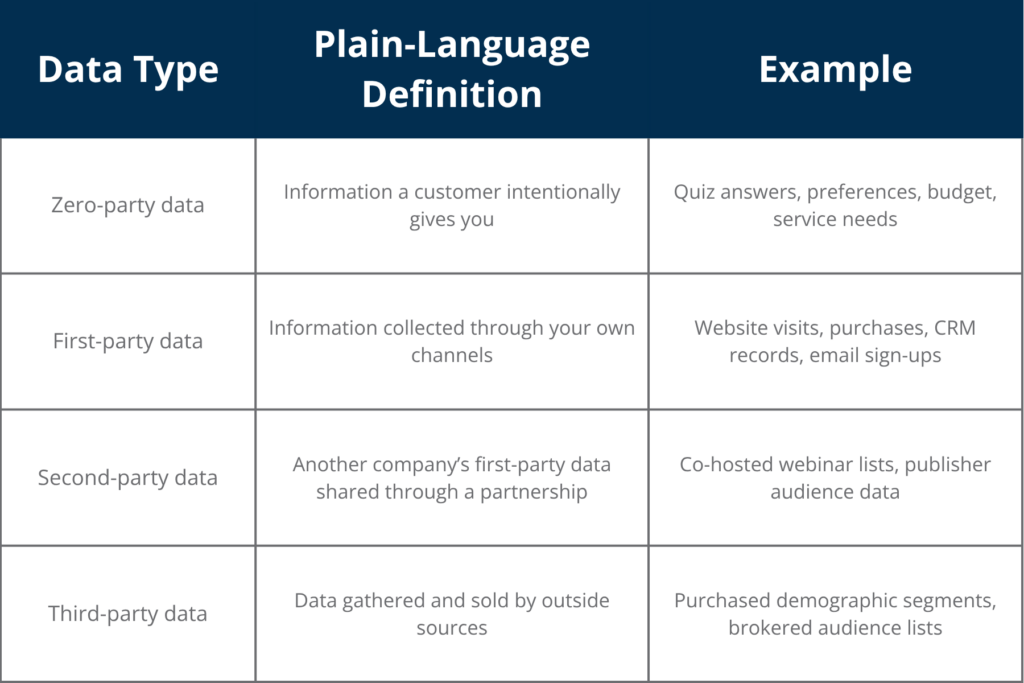
For most SMBs, zero-party and first-party data are the most valuable because they come from direct customer relationships. Second-party data can help with trusted audience expansion. Third-party data can still support top-of-funnel prospecting, but it should not be the foundation of your marketing strategy.
What Is First-Party Data?
First-party data is what you gather straight from your customers and prospects through your own channels. Purchases, website clicks, email sign-ups, support conversations, call tracking, form submissions, and CRM activity all count.
Since you collect it directly, first-party data gives you a clearer view of who your audience is, what they care about, and where they are in the customer journey. It also gives your team a stronger reporting foundation because the data is tied to real interactions with your brand.
For SMBs, first-party data is one of the most valuable marketing assets available. It reflects real behavior from people who already know your business.
First-Party Data Examples for SMBs
First-party data can come from everyday marketing and sales touchpoints, including:
- Website behavior, like pages viewed, products browsed, and forms started
- Purchase history and order values from your store or point-of-sale system
- Email and SMS sign-ups from website forms
- Loyalty-program activity and reward redemptions
- Survey responses and feedback forms
- Contact records stored in your CRM
- Phone calls, chat conversations, and consultation requests
- Appointment bookings or demo requests
- Lead-source data from SEO, PPC, social media, and referral campaigns
What Is Third-Party Data?
Third-party data comes from companies that have no direct relationship with your customers. Data brokers, ad networks, marketplaces, and other outside providers collect data across many sources, package it into audience segments, and sell or make it available to advertisers.
Common third-party data examples include:
- Purchased demographic lists
- Interest-based ad segments
- Household-income segments
- Behavioral audiences from outside networks
- Data-enrichment fields added by vendors
- Prospecting audiences built from outside data sources
What Is Second-Party Data?
Second-party data is another company’s first-party data shared with you through a direct relationship. It is not purchased from a broad data broker. It comes from a known partner.
For example, a business might partner with a complementary brand for a co-hosted webinar, shared promotion, publisher campaign, or industry-specific event. The value depends on the quality of the partner’s audience, the relevance of the data, and the clarity of the data-sharing agreement.
Second-party data can be useful, but it still requires careful consent review, privacy documentation, and quality control.
What Is Zero-Party Data?
Zero-party data is information customers intentionally share with your business. It is not inferred from behavior. It comes directly from what the person tells you.
Examples include:
- Quiz answers
- Product preferences
- Service needs
- Budget ranges
- Purchase timelines
- Style preferences
- Communication preferences
- Consultation-form responses
- Preference-center selections
Zero-party data is especially useful for lead generation because it captures intent. A person who tells you what they need, when they need it, and what problem they are trying to solve is giving your team valuable information for follow-up, segmentation, and personalization.
First-Party vs. Third-Party Data: Key Differences
Here is a side-by-side look at where each data type fits.
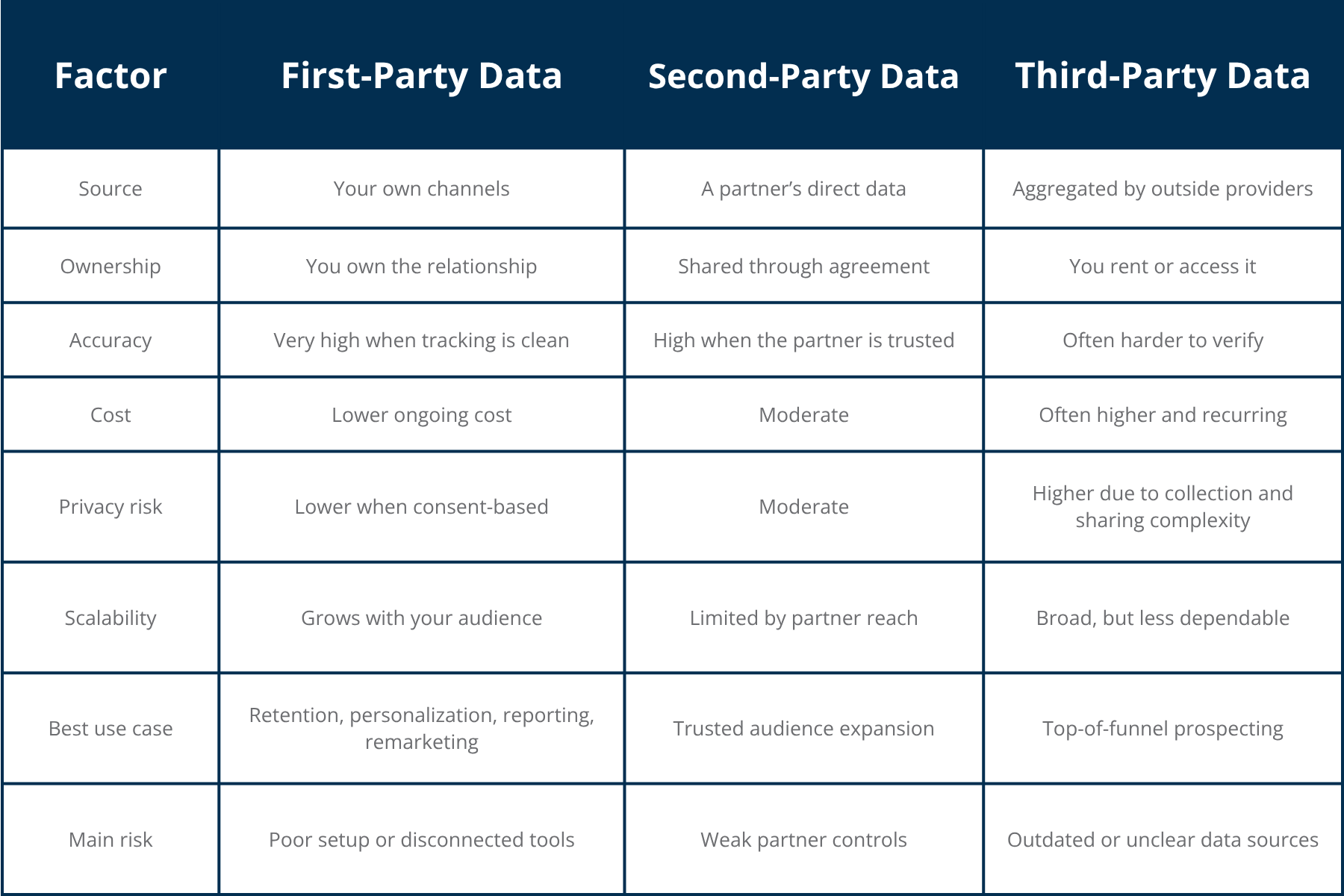
For a growing business, first-party data delivers the strongest mix of accuracy, control, cost efficiency, and long-term marketing value.
Is Third-Party Data Going Away?
Third-party data is not disappearing completely. The better way to think about it is that third-party data is losing some of the reliability marketers once expected from it.
Safari introduced full third-party-cookie blocking in 2020, and Firefox’s Enhanced Tracking Protection blocks many trackers that follow users across websites. Chrome has not fully removed third-party cookies, but Google’s current third-party-cookie guidance tells teams to plan for cases where third-party cookies are blocked by user choice.
That means marketers should not build their growth strategy around rented audiences alone. Third-party data can still play a role, but first-party data gives your business a more stable foundation.
Privacy Laws Are Changing the Data Conversation
Privacy expectations are growing across the United States and globally. The IAPP tracks comprehensive state privacy legislation and notes that its U.S. tracker was last updated on June 29, 2026.
Two major privacy frameworks still shape much of the conversation. The General Data Protection Regulation gives people in the European Union rights over their personal data, including the right to request erasure in certain situations. The California Consumer Privacy Act gives California consumers more control over the personal information businesses collect, including rights related to access, deletion, and opting out of certain data uses.
Privacy also affects trust. Cisco’s 2024 Consumer Privacy Survey found that 75% of consumers said they would not purchase from organizations they do not trust with their data.
For SMBs, privacy-first marketing is not only about risk reduction. It is also a way to build stronger customer relationships.
Why First-Party Data Matters for AI Marketing
AI-powered marketing depends on the quality of the data behind it. If your customer data is outdated, scattered, duplicated, or built on weak third-party signals, your AI tools will have a harder time producing useful recommendations.
Clean first-party data can help improve:
- Audience segmentation
- Predictive targeting
- Email personalization
- Paid-media optimization
- Lead scoring
- Landing-page personalization
- Customer-retention campaigns
- Sales follow-up
- Campaign reporting
This matters because AI tools are only as useful as the inputs they receive. A business with clean CRM data, clear conversion tracking, consent-based email lists, and organized customer profiles has a stronger foundation for AI-assisted marketing than a business relying only on broad third-party audiences.
When Should Marketers Use Each Type of Data?
Each data type has a role. The goal is to know which data type should guide each part of your marketing strategy.
Use zero-party data when you want to understand customer intent. Quizzes, preference centers, consultation forms, and surveys can reveal what people want directly from them.
Use first-party data when you want to improve retention, personalization, remarketing, SEO insights, PPC campaigns, email marketing, and reporting.
Use second-party data when you have a trusted partner with a relevant audience. This can work well for co-marketing, publisher partnerships, sponsorships, and industry-specific campaigns.
Use third-party data carefully when you need broader reach, prospecting, enrichment, or market research. It can support awareness campaigns, but it should not replace your own customer data.
How This Fits Into a First-Party Data Strategy
This comparison is the starting point. Once marketers understand where each data type comes from and how reliable it is, the next step is building a strategy for collecting, organizing, and activating first-party data.
A complete first-party data strategy should answer questions like:
- What customer data do we already collect?
- Where does that data live?
- Do we have clear consent?
- Can we connect website, CRM, call, email, and paid-media data?
- Which campaigns are generating qualified leads or sales?
- How can we use this data to improve SEO, PPC, email, CRO, and reporting?
Build a Privacy-First Data Strategy With National Positions
National Positions helps SMBs turn customer data into measurable marketing performance. With 22+ years of digital marketing experience, 300+ client partnerships, and Google Premier Partner status, our team builds conversion-focused strategies rooted in transparency, tracking, and real ROI.
Our approach connects first-party data to the channels that drive growth, including:
- SEO and content strategy
- AI search optimization and GEO strategy
- PPC and paid-media campaigns
- Ecommerce and Amazon marketing
- Conversion-rate optimization
- Landing-page strategy
- Email marketing and audience segmentation
- Analytics and reporting
- Lead-generation campaigns
- CRM, tracking, and first-party data audits
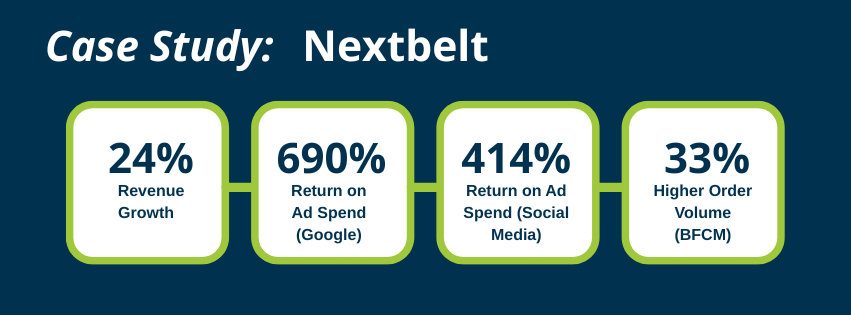
Ready to protect your budget and improve campaign performance? Schedule a free consultation with National Positions today and let our team help you build a privacy-first, first-party data strategy around your goals.
Frequently Asked Questions
What is the difference between first-party and third-party data?
First-party data is collected directly from your own customers and prospects with consent, so your business owns the relationship and the source of the data. Third-party data comes from outside providers that gather information from many sources, which can make it harder to verify, less accurate, and less reliable for long-term marketing.
What is zero-party data, and how is it different from first-party data?
Zero-party data is information a customer intentionally shares with your business, such as quiz answers, service preferences, budget ranges, product interests, communication preferences, goals, or purchase intentions. First-party data often includes observed behavior, like website visits, purchases, form submissions, and email engagement. Both are valuable because they come from a direct customer relationship.
What is second-party data?
Second-party data is another company’s first-party data shared with you through a direct partnership. It can be useful for co-marketing, publisher campaigns, sponsorships, and trusted audience expansion when the partner’s audience is relevant and the data-sharing terms are clear.
Is third-party data going away?
Third-party data is not disappearing completely, but it is becoming less dependable. Browser restrictions, privacy laws, consent requirements, user controls, and ad-blocking behavior have made third-party data less predictable than it was in the past. That is why many marketers are shifting more focus toward first-party and zero-party data.
How do I collect first-party data for my small business?
Start with the tools you already use, like your website, CRM, email platform, lead forms, call tracking, point-of-sale system, and appointment-booking tools. Add clear opt-ins, useful lead magnets, preference questions, loyalty programs, and short surveys to collect more consent-based information.
How does first-party data improve PPC campaigns?
First-party data can improve PPC campaigns by helping your team build stronger remarketing audiences, identify higher-quality leads, track conversions more accurately, and adjust ad spend based on real customer behavior. This helps paid-media campaigns focus on people who are more likely to engage, convert, or return.
How does first-party data improve SEO?
First-party data can show which pages attract qualified traffic, which topics lead to conversions, and which customer questions deserve stronger content. This helps your SEO strategy focus on business outcomes, not traffic alone.
What should I read next after learning the difference between first-party and third-party data?
The next step is The Complete Guide to First-Party Data Strategy for Marketers. That guide explains how to collect, organize, protect, and activate first-party data across SEO, PPC, ecommerce, Amazon, AI optimization, email, analytics, CRO, and lead generation.
Sources
- Google. The Privacy Sandbox timeline for the web. Privacy Sandbox.
- Cisco. Consumer Privacy Survey. Cisco Trust Center, 2023.
- State of California Department of Justice. California Consumer Privacy Act (CCPA). Office of the Attorney General.