Executive Summary: Media Mix Modeling (MMM) is a privacy-first, top-down statistical method that analyzes historical spend and sales data to optimize marketing budgets across channels. Historically restricted to enterprise brands with six-figure budgets, open-source platforms like Google Meridian and Meta Robyn have made MMM accessible to small and midsize businesses (SMBs).
Key Takeaways
- Cookieless Measurement: MMM calculates channel ROI using aggregate spend and sales data, operating entirely without third-party cookies or user tracking.
- Fills the Measurement Gap: While 85% of marketers feel confident measuring ROI, only 32% measure it holistically across all channels, according to Nielsen’s Annual Marketing Report [¹].
- Accessible Open-Source Tools: Open-source frameworks like Google’s Meridian and Meta’s Robyn allow SMBs to run enterprise-grade models for free [⁴].
- Strategic vs. Tactical: Click tracking answers “Who converted today?” while MMM answers “How should next quarter’s budget be split across channels to maximize revenue?” [³] [⁵].
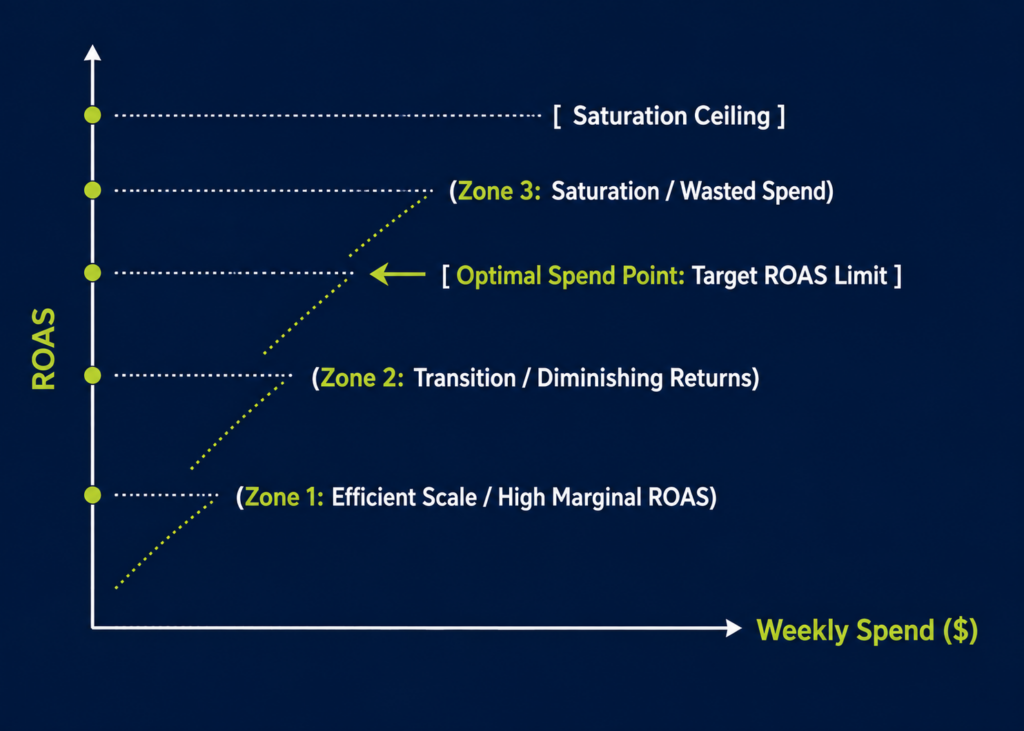
- Actionable ROI Output: The primary deliverable of MMM is a clear channel response curve showing where additional spend drives growth and where spend hits diminishing returns [⁵].
What Media Mix Modeling Is (and Isn’t)
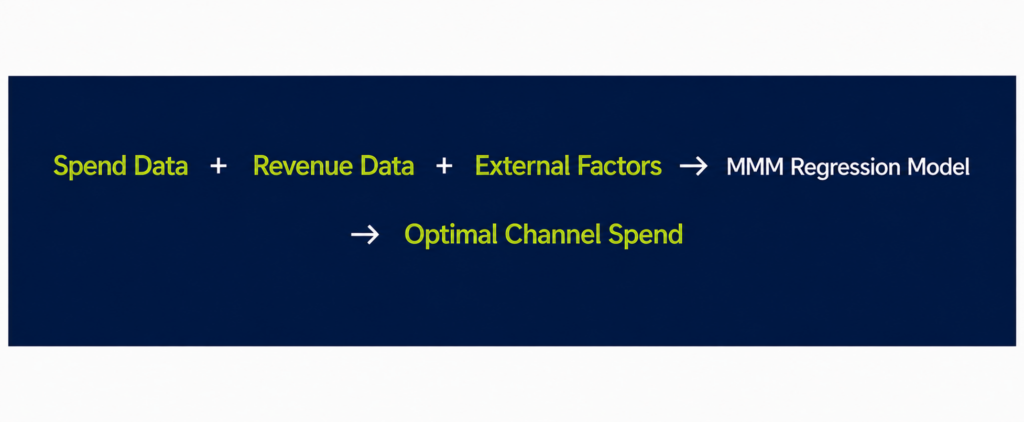
Media Mix Modeling (MMM) is a top-down statistical measurement method that quantifies the revenue contribution of each marketing channel [³]. By combining aggregate channel spend, sales revenue, and external factors (such as seasonality, economic trends, and promotional calendar events), MMM uses regression analysis to estimate how incremental media spend impacts bottom-line growth.
What MMM Is Not:
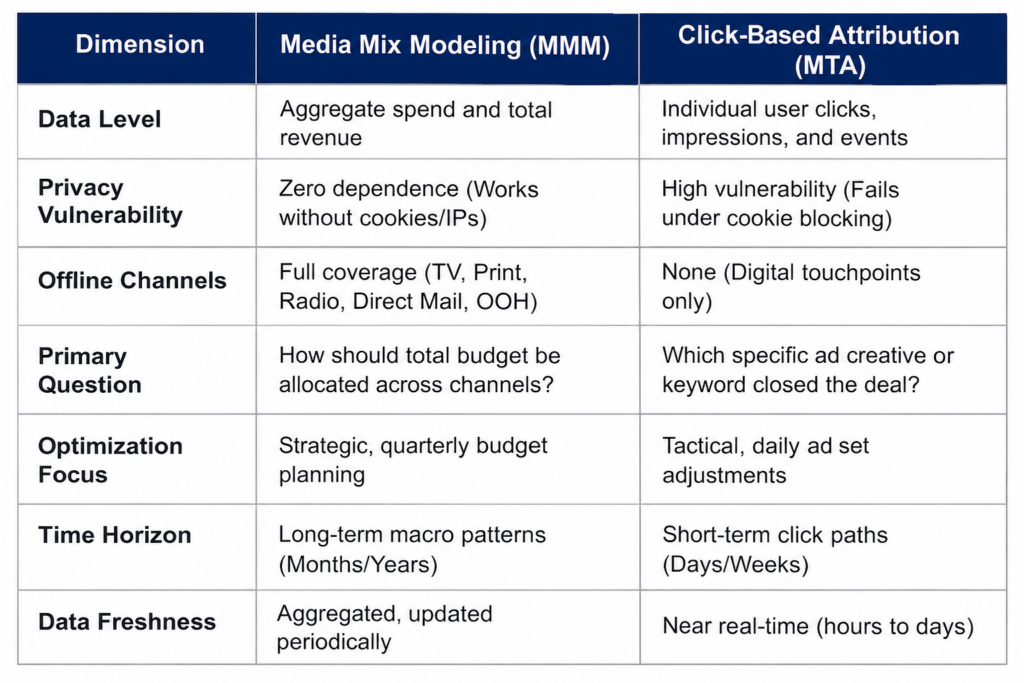
- It is not click-based tracking: Pixel-based tracking follows an individual user from ad click to purchase. MMM never tracks individual users; it operates strictly on aggregate baseline data, making it immune to cookie loss, privacy restrictions, and walled gardens.
- It is not a real-time tactical dashboard: MMM analyzes patterns over months to project long-term impact. It answers strategic questions like “How do we split next quarter’s budget between Paid Search, Social, and Offline?” rather than tactical questions like “Should we increase bid prices on ad set X today?”
To explore how user-level tracking and statistical modeling work together, read our companion guide on MTA vs. MMM.
Why MMM Is Crucial for Smaller Brands Right Now
Media mix modeling was historically an enterprise-only solution due to cost and technical complexity. Two market shifts have brought MMM within reach of smaller businesses:
1. The Breakdown of User-Level Attribution
As third-party cookies depreciate and platforms restrict cross-site tracking, click-based attribution models have become inaccurate. Marketers require a measurement framework independent of user tracking [²]. Gartner introduced its first dedicated Magic Quadrant for Marketing Mix Modeling Solutions in response to this shift, while eMarketer reports that 53.5% of US marketers now use MMM, with 56% of ad buyers increasing investment in the approach [²].
2. Free, Open-Source Tools
Enterprise-grade modeling frameworks are now freely accessible, giving smaller organizations the same strategic clarity at a fraction of the historical cost [⁴]:
- Google Meridian: An open-source Bayesian MMM framework that includes advanced reach-and-frequency modeling, particularly effective for video and search integration [⁴].
- Meta Robyn: An open-source R-based machine learning framework that automates calibration and handles complex time-series data [⁴].
Media Mix Modeling vs. Click-Based Attribution
Neither method replaces the other entirely; healthy analytics frameworks use both [³]. Click data informs day-to-day tactical optimization, while MMM establishes overarching channel allocation [⁵].
How an SMB Can Get Started with MMM in 6 Steps
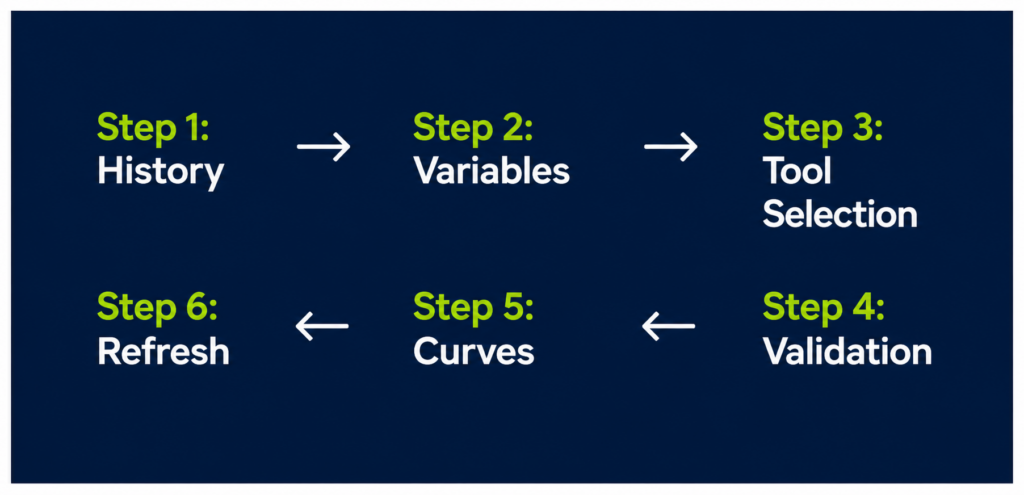
Step 1: Aggregate Historical Data
Gather a minimum of 52 weeks (ideally 104 weeks) of weekly channel spend and revenue data. Longer time horizons allow the model to isolate true baseline channel performance from seasonal fluctuations [³].
Step 2: Account for External Factors
Log offline promotions, price changes, product launches, regional economic shifts, and seasonal swings. Omission of these variables forces the model to falsely attribute exogenous sales spikes to marketing channels.
Step 3: Select an Open-Source Modeling Framework
- Choose Meta Robyn for smaller teams requiring automated hyperparameters and fast implementation [⁴].
- Choose Google Meridian if YouTube, video campaigns, and reach/frequency metrics make up a major portion of your media mix [⁴].
Step 4: Validate Model Outputs
Assess the model against historical realities:
- Does the model accurately predict past revenue spikes?
- Do channel contribution estimates align with business logic?
- Note: If a proven baseline channel is rated at 0% contribution, calibrate the model inputs rather than acting on the flawed output.
Step 5: Evaluate Channel Diminishing Returns
Analyze the response curve for each channel. The output shows the exact dollar threshold where additional spend stops generating proportional returns (saturation) [⁵].
Incremental Revenue ($)
Step 6: Reallocate Budget and Establish a Refresh Cadence
Shift capital from saturated channels into channels operating below their saturation threshold [⁵]. Re-run the model on a quarterly schedule to adapt to creative fatigue, market shifts, and competitive changes.
Turning Model Outputs into Budget Decisions
An MMM report only adds value when it alters capital allocation [⁵].
- Shift Capital Based on Marginal ROAS: If the model shows Search continuing to climb while Social revenue has flattened, move incremental budget toward Search until its marginal return matches Social [⁵].
- Pair Allocation with Experimentation: Treat MMM outputs as directions to test rather than absolute mandates. Validate suggested budget shifts using geo-lift tests or incrementality tests before making permanent reallocations.
- Unify Top-Down and Bottom-Up Analytics: Feed MMM outputs into your primary reporting layer alongside first-party tracking data to maintain visibility from executive strategy down to campaign execution.
3 Common Pitfalls to Avoid
- Inconsistent or Incomplete Data: Missing variables or varying data formats destroy model credibility. Clean, structured weekly data is a prerequisite.
- Static Model Syndrome: Models deteriorate as customer behavior, offer structures, and market conditions change. A model left unrefreshed for over six months leads to misallocated budgets.
- Expecting Granular Precision: Using MMM to evaluate individual keyword bids or ad creatives is a misuse of the method. Reserve MMM for top-down strategic shifts, and use granular click data for ad set tuning.
Partner with National Positions for Data-Driven Growth
While open-source tools have made MMM accessible, building validated models, isolating true incrementality, and turning statistical outputs into reliable budget decisions requires dedicated expertise.
National Positions provides performance measurement frameworks for growing brands:
- Proven Track Record: Over 22 years of experience and 300+ client success stories backed by a 97% retention rate.
- Google Premier Partner Expertise: Advanced analytics capabilities aligned with modern measurement standards.
- The PACE Methodology: Our integrated framework (Plan, Analyze, Convert, Expand) grounds budget decisions in statistical evidence.
- Unified Attribution: We connect macro-level MMM strategy with micro-level customer behavior through our proprietary first-party attribution platform, AdBeacon.
Frequently Asked Questions
What is media mix modeling in plain language?
Media mix modeling (MMM) is a statistical technique that analyzes historical channel spend, sales, and external factors (like seasonality) to determine how much revenue each marketing channel generates [³]. It informs optimal budget allocation across channels without tracking individual user behavior.
How does MMM differ from multi-touch attribution (MTA)?
Multi-touch attribution tracks individual users across digital touchpoints to assign credit to specific clicks. MMM uses aggregate, business-level data to evaluate both online and offline channels simultaneously, remaining fully operational in cookieless environments [³].
Can small and midsize businesses realistically afford MMM?
Yes. Open-source frameworks like Google Meridian and Meta Robyn are free to use [⁴]. SMB costs are now limited to data preparation, validation, and execution—which can be managed in-house or with an agency partner.
How much historical data is required for an accurate MMM?
Models require a minimum of 12 months (52 weeks) of continuous, weekly spend and sales data. Two full years (104 weeks) is recommended to account for annual seasonality and market shifts [³].
How often should an SMB refresh its MMM?
MMM models should be updated quarterly. A quarterly cadence allows teams to adjust budgets for creative fatigue, seasonal demand changes, and shifting channel efficiency.
Sources & References
- Nielsen, “2025 Annual Marketing Report: From Chaos to Clarity,” Nielsen Insights.
- EMARKETER, “Why media mix modeling, attention metrics may take the spotlight in 2025,” EMARKETER Analysis.
- Invoca, “Media Mix Modeling (MMM): The Complete Guide for 2025,” Invoca Blog.
- Double, “Google Meridian vs. Meta Robyn: What’s Next for MMM?,” Double Newsletter.
- Forbes Agency Council, “Media Mix Modeling: A Tried-And-True Way To Allocate Your Budget,” Forbes.