Executive Summary: Answer Engine Optimization (AEO) is the practice of structuring web content, technical schema, and brand entity authority so that generative answer engines—such as Perplexity, Google Gemini, and Microsoft Copilot—retrieve, extract, and cite your pages within synthesized responses. Earning AEO citations requires passing two retrieval layers: entering the search engine’s candidate pool and presenting passage-level facts that models can extract cleanly.
Key Takeaways
- Citations Over Rank Positions: Traditional SEO competes for link rankings on a SERP; AEO competes for inline citations and brand recommendations inside AI responses.
National Positions - The 2-Stage Retrieval Pipeline: AEO requires winning at both the Retrieval Layer (crawlability, indexation, relevance) and the Selection Layer (passage clarity, E-E-A-T, extraction ease).
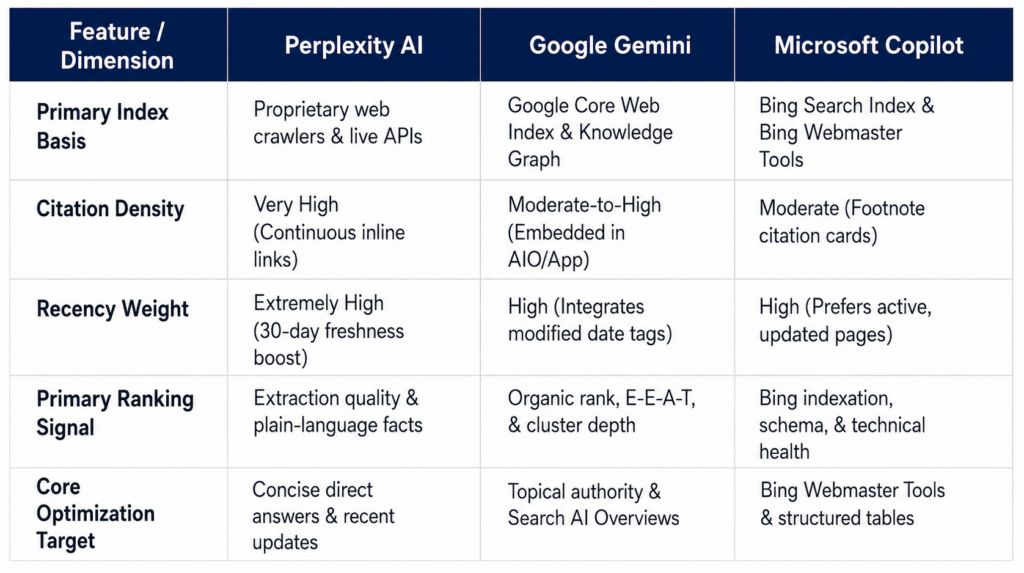
- Engine Index Dependencies: Perplexity relies on real-time web crawlers; Gemini pulls from Google’s core web index; Copilot depends entirely on Bing’s search index.
- Passage-Level Extraction: LLM answer engines extract discrete 40-to-60-word passage blocks rather than whole web pages. Placing concise answers near section leads dramatically increases citation frequency.
- No Room for Speculative Fluff: Unverified claims, keyword stuffing, and outdated statistics lower model confidence scores, causing RAG algorithms to omit pages during generation.
What Is Answer Engine Optimization, Really?
Answer Engine Optimization (AEO)—often used interchangeably with Generative Engine Optimization (GEO)—is the discipline of configuring digital content so that artificial intelligence search platforms select and cite your business as a trusted primary source.
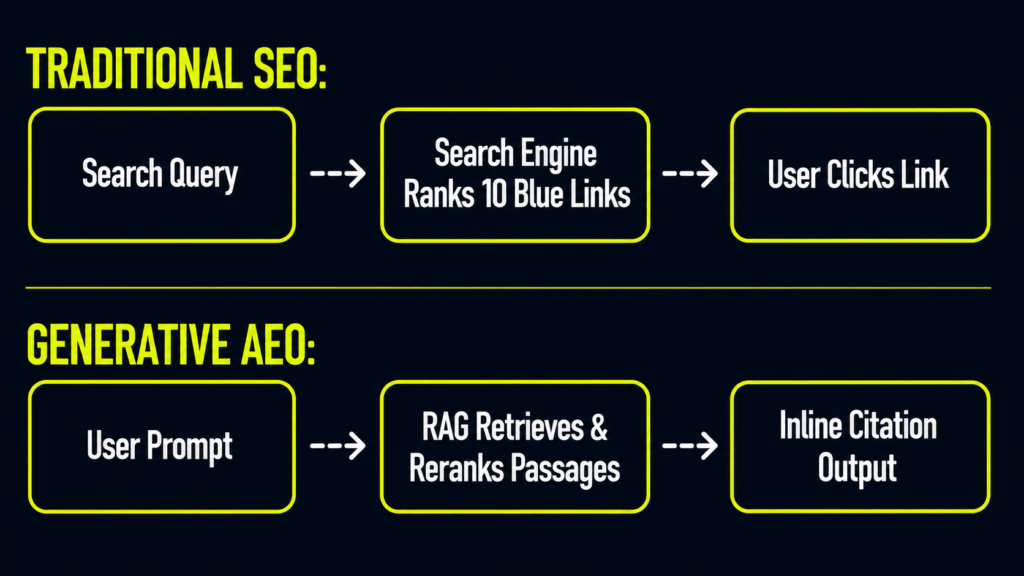
When a user prompts an AI engine (e.g., “What is the best return policy structure for a DTC apparel brand?”), the system does not generate answers in isolation. Most modern answer engines run Retrieval-Augmented Generation (RAG) pipelines:
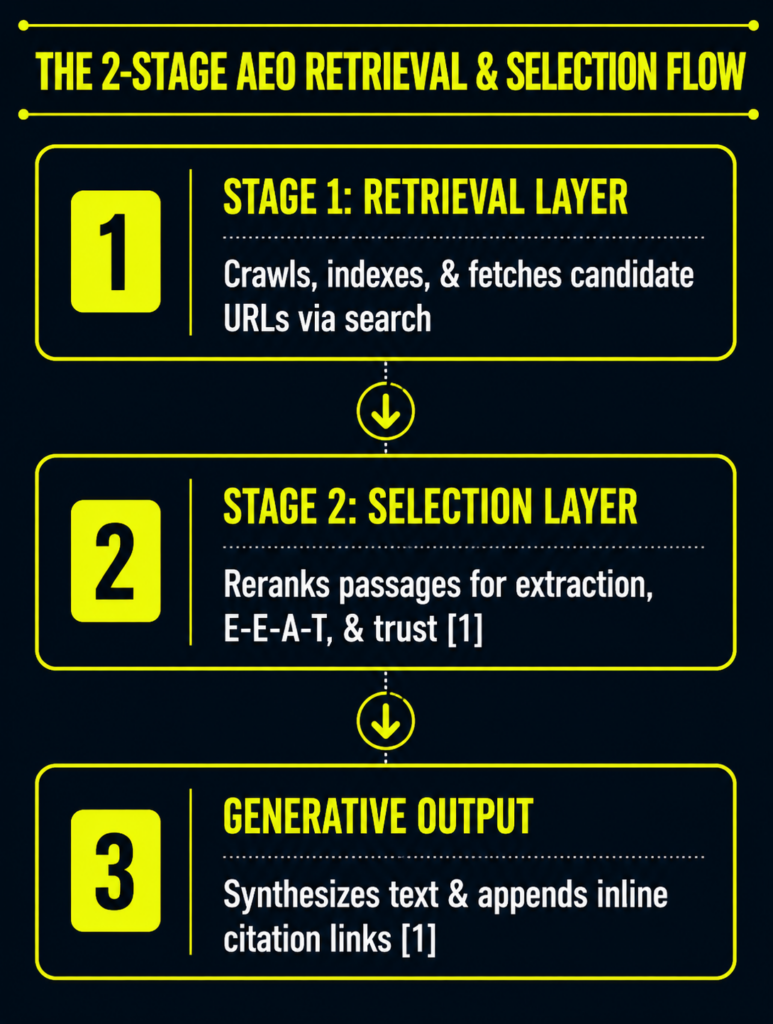
- Stage 1 (Get Retrieved): The page must reside in the engine’s search index (Google, Bing, or proprietary web crawlers), demonstrating high topical relevance to the query.
- Stage 2 (Get Selected): The engine evaluates passage-level clarity, domain trust, E-E-A-T credentials, and extraction quality to select which source URLs to cite in the final generated text.
To understand how AEO integrates into an overall multi-platform strategy, explore our pillar guide, The Complete Guide to AI Search Visibility (GEO).
How Do Answer Engines Pick and Cite Sources?
Generative AI platforms utilize specific machine-readability signals during passage selection:
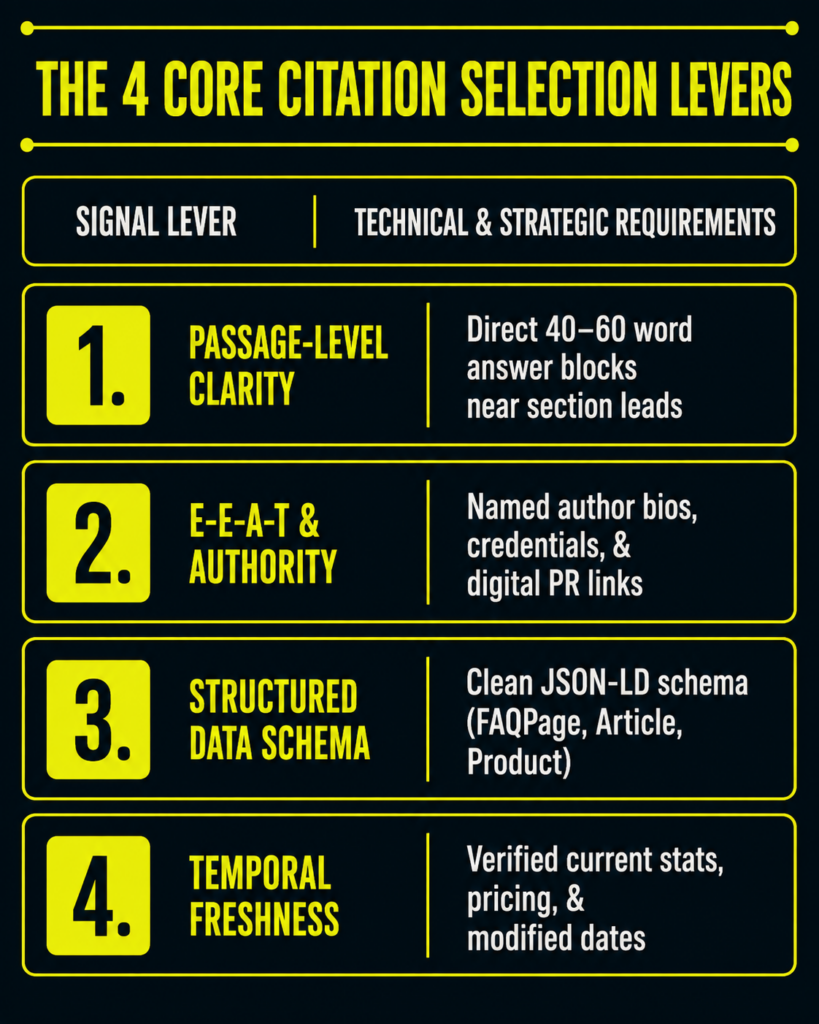
Passage-Level Clarity: Answer engines extract specific paragraphs rather than entire web pages. Placing direct, 40-to-60-word answers at the top of sections allows parsers to lift facts cleanly.
- Google E-E-A-T Framework: Experience, Expertise, Authoritativeness, and Trustworthiness govern model confidence. Verified author credentials, organization schema, and external media mentions validate domain credibility.
- Factual Consensus: RAG models prioritize claims that are confirmed across multiple reputable web properties. Outlier claims without external verification are filtered out as low-confidence data.
How Do Perplexity, Gemini, and Copilot Differ?
While all three engines rely on Retrieval-Augmented Generation, their underlying web indexes and citation behaviors vary significantly.
Platform Architecture & Citation Comparison Matrix
5 Antiquated SEO Practices to Stop Immediately
- Burying Answers Under 2,000-Word Intros: Forcing readers to scroll past long introductions before answering a query causes AI models to extract answers from concise competitor pages.
- Keyword Stuffing for Machine Density: Large language models evaluate semantic context and entity relationships. Repeating target keywords degrades readability and signals low content quality.
- Publishing Unsourced Claims and Unverified Data: Citing fabricated numbers or unverified statistics damages domain trust scores. Always cite primary sources and industry benchmark data.
- Ignoring Bing Webmaster Tools: Failing to verify your domain in Bing Webmaster Tools eliminates your site from the primary index powering Microsoft Copilot and ChatGPT live search.
- Treating AEO as a One-Time Setup: AI models update continuously, and web consensus shifts. Maintaining citations requires quarterly content refreshes and data audits.
National Positions
The AEO Checklist: A Step-by-Step Implementation Plan
Follow this 7-step execution roadmap to structure your content for AI answer extraction.
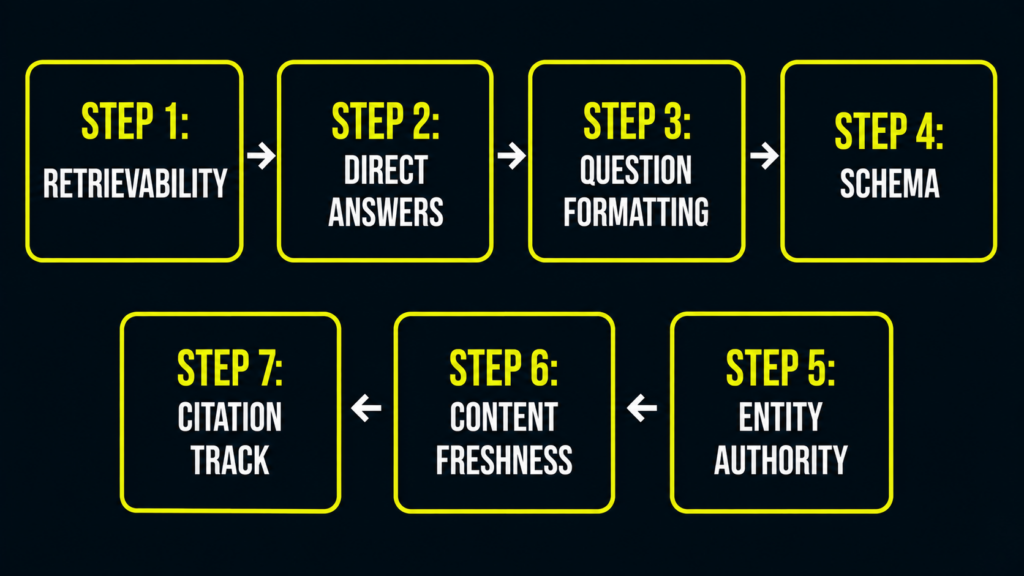
Step 1: Confirm Technical Retrievability
Inspect domain indexation in both Google Search Console and Bing Webmaster Tools. Resolve canonical errors, XML sitemap gaps, and robots.txt rules blocking AI crawlers (e.g., OAI-SearchBot, PerplexityBot).
Step 2: Front-Load Direct Answers
Rewrite lead paragraphs across priority commercial pages to deliver a 40-to-60-word direct answer within the first two sentences of major sections.
Step 3: Structure Content Around Real Questions
Format subheadings (H2, H3) as explicit buyer questions (e.g., <H2>What Is the Cost of Server-Side Tracking?</H2>). Ensure each section functions as a standalone, extractable text block.
Step 4: Deploy Machine-Readable JSON-LD Schema
Implement valid JSON-LD schema markup (Article, FAQPage, Organization, Product). For a technical deep dive on schema architecture, read Structured Data and Schema for AI Search.
Step 5: Build Entity Authority and Co-Citations
Attach credentialed author bios to key articles, build an updated Organization profile, and execute digital PR campaigns to earn brand mentions across authoritative news outlets. Explore our PR and AI Visibility solutions to build off-site trust.
Step 6: Maintain Content Freshness
Add clear dateModified timestamps to cornerstone guides, update pricing tables quarterly, and refresh statistics to maintain high recency scores.
Step 7: Measure AI Citations and Share of Voice
Monitor brand mention frequency across target prompts in ChatGPT, Perplexity, Gemini, and Copilot. Our specialized AI Search Optimization team provides cross-platform tracking and citation performance dashboards.
Partner with National Positions for Advanced AEO
Winning citations across Perplexity, Gemini, Microsoft Copilot, and Google AI Overviews requires technical analytics engineering, digital PR, and structured content design.
National Positions delivers complete Answer Engine Optimization solutions:
- 22+ Years of Search Engine Leadership: Managing digital search and performance analytics for over 300 e-commerce and B2B brands.
- Google Premier Partner Leadership: Recognized in the top tier of performance marketing agencies globally.
- The PACE Framework: Our methodology (Plan, Analyze, Convert, Expand) grounds AI search strategies in verified revenue metrics.
- First-Party Attribution via AdBeacon: Our proprietary AdBeacon platform measures traffic, attribution, and conversion impact across paid, organic, and AI-driven channels.
Ready to audit your brand’s citation performance across AI answer engines? Book an AI search audit with our team to evaluate your current baseline and build a platform-specific AEO strategy.
Frequently Asked Questions
Is Answer Engine Optimization (AEO) the same as SEO?
No, though they share core technical foundations. SEO optimizes web pages to rank in organic blue-link search results. AEO optimizes content structure, JSON-LD schema, and entity authority so AI answer engines cite and recommend your brand inside synthesized responses.
How can a business track citations in Perplexity, Gemini, and Copilot?
Track citations by running monthly prompt sampling audits across each engine, monitoring custom GA4 AI referral traffic segments, and analyzing brand mention frequencies using specialized AI visibility software.
Does structured data schema guarantee an AI answer citation?
No. JSON-LD schema markup helps machine parsers understand page structure, but it does not guarantee a citation. Passage relevance, E-E-A-T authority, and content freshness remain the primary selection factors.
How long does AEO take to show measurable results?
Pages holding top-10 organic rankings can see AI citations within 30 to 60 days of front-loading direct answers and updating schema. Domains requiring foundational authority and backlink improvements typically take 3 to 6 months.
Do businesses need separate content for each AI answer engine?
No. Build a single, well-structured, authoritative page featuring clear 40-to-60-word section leads. Then manage technical retrieval channels: verify Bing Webmaster Tools for Copilot, maintain Google E-E-A-T for Gemini, and refresh timestamps for Perplexity.
Sources & References
- Perplexity AI Developer Documentation, “Citations, Source Retrieval, and Live Web Search Mechanics,” Technical Disclosures.
- Microsoft Bing Webmaster Disclosures, “Bing Indexing Architecture and Retrieval Roles in Copilot,” Technical Webmaster Guidelines.
- Google Search Central, “Guidance on AI Features in Search, Helpful Content, and E-E-A-T Frameworks,” Technical Documentation.
- Search Engine Land, “Answer Engine Optimization (AEO) & Generative Search Trends,” Industry Reporting.
- Semrush, “AI Search Visibility, Citation Tracking Benchmarks, and RAG Retrieval,” Digital Marketing Research.