Executive Summary: Generative Engine Optimization (GEO) requires treating AI answer engines as distinct platforms rather than a unified channel. Google AI Mode relies on Google’s core web index and Knowledge Graph; ChatGPT, Copilot, and Meta AI rely heavily on Bing’s search index; Perplexity uses a proprietary recency-weighted crawler; and Alexa for Shopping indexes internal Amazon catalog data. Optimizing for AI visibility requires platform-specific indexing, formatting, and citation strategies.
Key Takeaways
- No Unified “AI SEO”: Generative engines use different indices, weighting models, and citation frequencies. Standardizing tactics across all engines causes underperformance.
- Index Dependencies: ChatGPT, Microsoft Copilot, and Meta AI rely primarily on Bing’s web index for live web retrieval. Optimizing for Bing Webmaster Tools is mandatory for ChatGPT visibility.
- Massive Citation Gaps: Google AI Overviews cite sources heavily across queries, and Perplexity cites aggressively by design. In contrast, only 6.8% of U.S. desktop queries on ChatGPT included an external link as of May 2026.
- Recency Weighting: Perplexity prioritizes newly published or refreshed content over established historical pages.
- Catalog vs. Web Search: Amazon’s Alexa for Shopping evaluates structured product listings, customer reviews, and seller metrics rather than standard web articles or schema markup.
Why There Is No Single “AI SEO”
Generative Engine Optimization (GEO) is the strategic process of structuring digital content to be indexed, synthesized, and cited by artificial intelligence answer engines. Because AI search platforms run on distinct technical foundations, optimizing for one engine does not guarantee visibility on another.
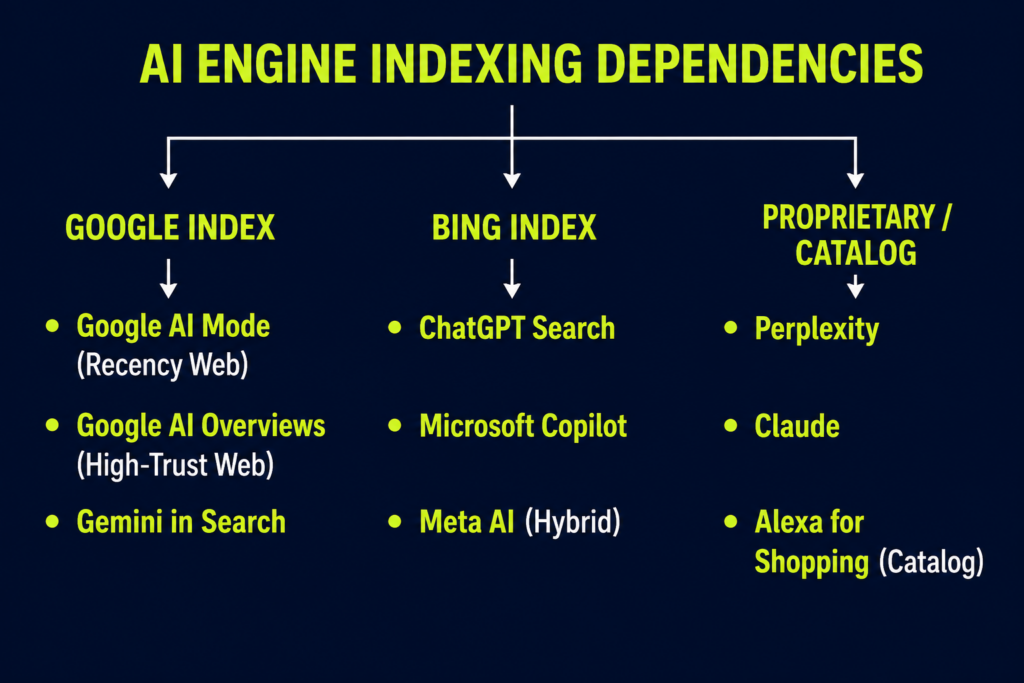
System Architecture Variations:
- Google AI Mode & AI Overviews: Built on top of Google’s core web index and Knowledge Graph, performing real-time retrieval for broad consumer intent.
- ChatGPT Search: Uses Bing’s index under a licensing agreement for live web lookups, combined with OpenAI’s proprietary retrieval layers.
- Perplexity: Operates a custom crawler layer designed to emphasize real-time information, recency, and broad source attribution.
- Microsoft Copilot: Powered by Bing’s index and tailored for enterprise, Microsoft 365, and B2B workflow contexts.
- Claude (Anthropic): Employs conservative web retrieval, favoring established, high-trust technical sources.
- Gemini App vs. Gemini in Search: Standalone Gemini operates via multimodal retrieval, whereas Gemini inside Google Search functions like AI Overviews.
- Meta AI: Integrates Bing web search with social and behavioral data across Instagram, WhatsApp, and Facebook.
- Alexa for Shopping (formerly Rufus): Evaluates Amazon’s internal catalog, product attributes, and customer reviews rather than open web pages.
How Different Are Citation Rates Across Engines?
Citation frequency varies significantly depending on platform architecture and product intent.
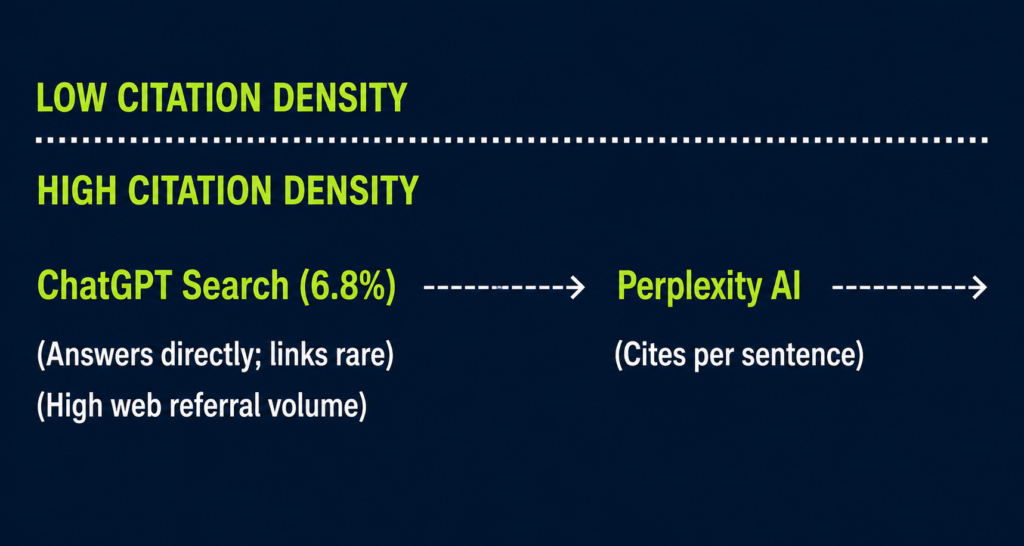
Key Performance Data:
- Google AI Mode & Overviews: Google AI Overviews expanded to cover 43% of search queries by late July 2026 [¹]. Google AI Mode visits grew from 126 million in June 2025 to 279 million by May 2026, with embedded citations increasing over fivefold [¹].
- The May 2026 Referral Shift: Following a major Google update on May 7, 2026, webpage referral traffic from Google AI interfaces jumped from 25% in March 2026 to 60% by late May 2026 [¹].
- ChatGPT Citation Sparsity: Despite reaching over 900 million weekly active users [²], only 6.8% of U.S. desktop queries on ChatGPT carried a web citation link as of May 2026 [²]. ChatGPT functions primarily as an answer engine, not a link directory.
- Perplexity Reach: Serving over 200 million monthly active users [²], Perplexity cites sources per claim, driving high-intent referral traffic for research and B2B queries.
Comprehensive Platform Comparison Matrix Core Differences: Index Dependency, Recency, and Catalog Data
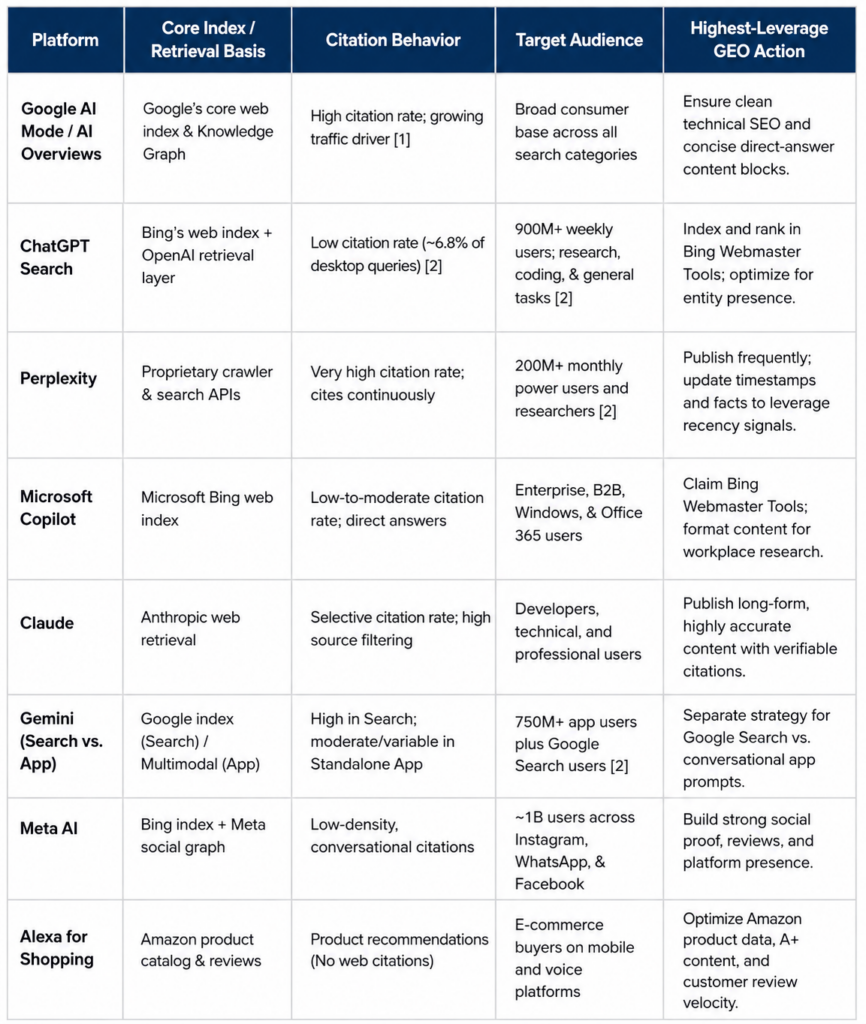
Core optimization principles apply across engines: concise lead paragraphs, clear headings, structured data, and fast rendering. However, key structural differences dictate platform performance:
- Bing Dependency: ChatGPT, Microsoft Copilot, and Meta AI pull directly from Bing. Sites blocking Bingbot or unindexed in Bing Webmaster Tools remain invisible across these AI engines.
- Recency Weighting: Perplexity prioritizes newly published or recently updated content. Static articles lose ranking position to refreshed assets with current timestamps.
- E-Commerce Catalog SEO: Alexa for Shopping ignores standard blogs and schema. It relies entirely on Amazon product detail pages, inventory metrics, and verified customer reviews.
Need a platform-specific GEO plan? Our specialized AI Search Optimization program helps e-commerce and B2B brands doing $5M–$50M/year audit their visibility and capture market share across ChatGPT, Perplexity, Google, and Copilot.
What to Stop Doing Immediately
- Stop treating AI SEO as a single channel: Operating with a single “AI optimization” checklist fails to address platform-specific indexing requirements.
- Stop ignoring Bing Webmaster Tools: Ignoring Bing cuts your brand off from ChatGPT, Microsoft Copilot, and Meta AI retrieval networks.
- Stop expecting high link traffic from ChatGPT: ChatGPT provides direct answers and rarely cites external links. Focus on brand entity placement rather than referral volume.
- Stop letting high-value content go stale: Static pages lose citation share on recency-focused search engines like Perplexity.
- Stop relying on blog content for Amazon discovery: Optimizing for Alexa for Shopping requires updating Amazon seller listings and product data.
Your 30-Day Platform Prioritization Action Plan
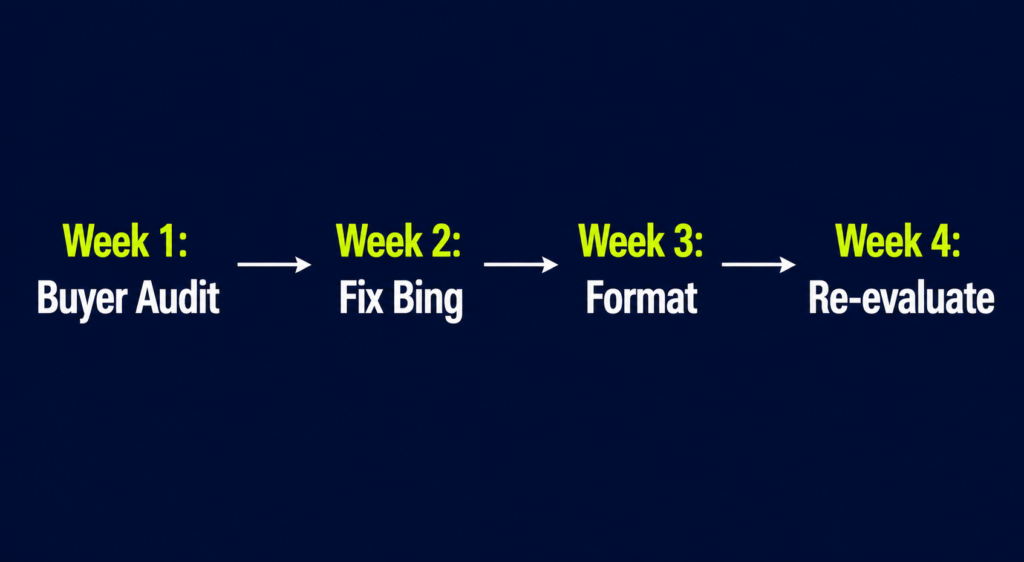
Days 1 to 7: Identify Where Your Buyers Search
- Compile 15 to 20 core buyer questions.
- Run these prompts across Google AI Mode, ChatGPT, Perplexity, Copilot, Gemini, and Alexa.
- Log which competitors are cited, recommended, or omitted.
Days 8 to 14: Resolve Core Indexing Gaps
- Verify and claim your domain in Bing Webmaster Tools.
- Submit XML sitemaps to Bing and resolve crawl errors.
- Check robots.txt files to ensure user-agents like OAI-SearchBot, PerplexityBot, and Bingbot are not inadvertently blocked.
Days 15 to 21: Align Content Formats to Engine Mechanics
- For Perplexity: Update publication dates, refresh statistics, and re-index core pages.
- For Google AI Mode: Structure lead sections with direct, 2–3 sentence answers to target intent.
- For Claude & Copilot: Expand technical depth, author credibility signals, and schema markup.
Days 22 to 30: Prioritize Platform Investment & Re-audit
- Focus resources on engines with high buyer usage (e.g., Meta AI/Alexa for DTC brands vs. Copilot/Claude for B2B SaaS).
- Re-run your 15–20 buyer prompts to establish a new performance baseline.
Deep-Dive Platform Guides
Explore individual platform optimization mechanics in our dedicated deep-dive guides:
- Google: Read Google AI Mode vs. AI Overviews to master Google’s dual AI search ecosystem.
- ChatGPT: Read The ChatGPT Search Playbook to optimize for Bing dependencies and OpenAI retrieval.
- Perplexity: Read Perplexity SEO to leverage recency weighting and citation algorithms.
- Microsoft: Read Microsoft Copilot and Bing Chat for B2B and enterprise optimization.
- Claude: Read Claude Cites Your Site to structure technical authority signals.
- Gemini: Read Gemini in Search vs. the Gemini App to navigate Google’s multimodal apps.
- Amazon: Read Alexa for Shopping to optimize Amazon catalog listings.
- Meta: Read Meta AI as a Search Engine to capture social search traffic.
- Analytics: Read How to Track AI Search Visibility Across Platforms to measure performance without complex spreadsheets.
Frequently Asked Questions
Which AI search engine should I optimize for first?
Prioritize the engine your target customers use most. B2C and e-commerce brands should focus on Google AI Mode, Perplexity, and Meta AI. B2B and enterprise software companies should prioritize Microsoft Copilot, ChatGPT, and Claude. E-commerce brands selling on Amazon should prioritize Alexa for Shopping.
Does ranking #1 on Google guarantee citations on ChatGPT?
No. ChatGPT Search relies on Bing’s web index for live web queries [²]. Pages ranking highly on Google will remain invisible to ChatGPT if they are poorly indexed or blocked on Bing.
Why does ChatGPT cite sources less often than Google AI Mode?
ChatGPT is designed to deliver direct conversational answers, including links in only 6.8% of desktop queries as of May 2026 [²]. Google AI Mode and Perplexity are structured as search engines, emphasizing inline links and web attribution.
Is Perplexity worth optimizing for if its total user base is smaller than Google?
Yes. Perplexity cites sources continuously, driving higher click-through rates from research-oriented, high-intent users [²].
How is optimizing for Alexa for Shopping different from standard web SEO?
Alexa for Shopping evaluates Amazon product detail pages, structured attribute data, inventory health, and customer reviews. It does not index web blogs or standard schema markup.
Do I need separate content teams for each AI search platform?
No. Core content assets can be adapted across engines using platform-specific optimization checklists: update dates for Perplexity, index on Bing for ChatGPT/Copilot, provide direct answers for Google, build long-form depth for Claude, and refine product data for Alexa.
Get an Authority Audit Across All AI Engines
Optimizing for generative search requires auditing how AI engines evaluate your brand. Book a call with our team to receive a custom baseline analysis across Google AI Mode, ChatGPT, Perplexity, and Copilot, and build a platform-specific GEO strategy.
Sources & References
- TechCrunch, “Google AI Overviews Growth and AI Mode Referral Data,” Reporting on 2026 Industry Search Analytics (Published July 27, 2026).
- Industry AI Adoption Reports, “Usage Benchmarks for ChatGPT, Perplexity, Gemini, and Bing,” Cross-Platform AI Search Studies (2026).
- Microsoft Bing Webmaster Docs, “Indexing Architectures and Web Retrieval in AI Assistants,”.