Having a mobile friendly site is more important than ever, and this week Google’s making that clear.
Over the last week, Google has begun a mass email campaign aimed to alert webmasters if their sites have mobile-usability issues.
What Does Mobile-Usibility Mean for Your SEO?
If your site isn’t mobile-friendly, Google wants you to know. Google starts off their email message by telling webmasters to “fix mobile usability issues found on [your website here],” explains that mobile-usability impacts a searchers mobile user-experience, and, most importantly: that the search engine will be displaying and ranking mobile webpages accordingly.
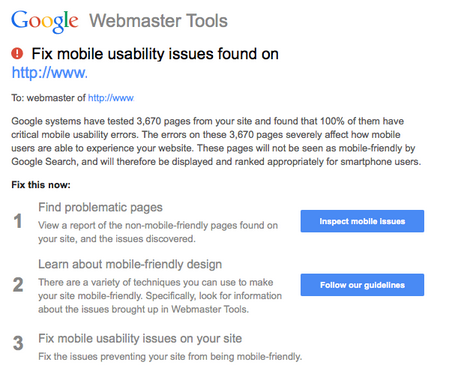
With more searchers using smartphones and tablets than desktops, having a site where every page is smartphone ready is essential to your SEO. Mobile usability errors are not only detrimental to a users experience once they’re on your site, they’re detrimental to your rankings too. What’s new, however, is not being penalized for a bad mobile site, but the potential for a rankings boost in reward for a good one.
Does this mean a mobile-focused algorithm update is ahead? There have been signs that Google is working towards a launch of an algorithm that gives preferential ranking to mobile-friendly sites–something that they’ve self-reportedly been experimenting with it since late last fall with the incorporation of “mobile-friendly” labels into their search results. They look a little something like this:
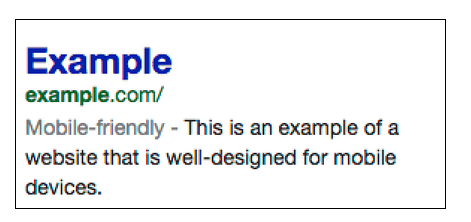
There are also mobile usability reports in Google Webmaster Tools, perhaps emphasizing the move towards mobile-usability as a ranking factor and making it clear to webmasters that the more mobile-friendly your site, the better.
What You Should Do Now
If you aren’t already focused on making your mobile-users’ experience better, you certainly should be now.
If Google is going to start giving the best of the bunch a ranking boost–you want to be one of them. Ensure your site offers a great mobile experience by prioritizing functionality and Google-friendly mobile web design. Pay attention to whether your site has easy to read text, limited distractions, large, effortless-to-click buttons and more by investing in a responsive or adaptive design.
What we’re learning is that it’s not simply good enough to have a site free from major mobile functionality errors. Instead of simply having a site that works looks good enough on a tablet or smartphone and then stopping, you should always be improving and optimizing your mobile presence in order to ensure you’re offering a user-experience Google may reward, but your users will definitely appreciate (with more click-throughs and conversions to boot).